
Why Your Modern San Jose Kitchen Needs a Dedicated Water Filtration Line for Your Espresso Machine
Your $3,000 La Marzocco or Rocket espresso machine is a precision instrument designed to extract perfect coffee flavors. But San Jose’s municipal water is quietly destroying it from the inside out. The Santa Clara Valley Water District reports water hardness levels averaging 15-20 grains per gallon—well above the Specialty Coffee Association’s ideal range of 3-5 grains. This mineral-rich water creates scale buildup that clogs boiler tubes, damages pressure sensors, and ruins extraction quality. Without proper filtration, you’re looking at expensive repairs within 12-18 months instead of the 10+ years your machine should last. Santa Clara Valley Water District.
Professional water filtration isn’t just about taste—it’s about protecting your investment from San Jose’s aggressive water chemistry. The Langelier Saturation Index for our local water consistently falls in the scale-forming range, meaning calcium carbonate deposits accumulate rapidly inside your espresso machine’s heating elements. These deposits create hot spots that burn out heating elements, restrict water flow through pressure gauges, and cause temperature instability that ruins shot consistency. A dedicated filtration line with proper pressure regulation and leak protection is the only reliable solution for San Jose coffee enthusiasts who want both great taste and machine longevity. Protecting your Evergreen basement with professional sump pump repair.
San Jose Water Hardness: The Silent Killer of Espresso Equipment
San Jose’s water comes primarily from Sierra Nevada snowmelt and local groundwater sources, picking up minerals as it travels through limestone-rich aquifers. The Santa Clara Valley Water District’s annual water quality reports show total dissolved solids (TDS) ranging from 350-450 ppm in most areas, with calcium and magnesium concentrations high enough to cause immediate scale formation in espresso boilers operating at 200°F. These minerals don’t just affect performance—they create a perfect storm for equipment failure.
The problem compounds in San Jose’s microclimates. Areas closer to the bay like Alviso and parts of East San Jose often see higher TDS readings due to brackish groundwater influence, while hillside communities in Los Gatos and Saratoga may have slightly lower but still problematic hardness levels. Regardless of your specific location within Santa Clara County, if your water comes from the municipal supply, you’re dealing with scale-forming conditions that no simple carbon filter can handle.
Understanding Espresso Machine Water Requirements
Professional espresso machines require specific water chemistry to function properly. The Specialty Coffee Association recommends water with 50-100 ppm TDS, pH between 6.5-7.5, and hardness of 3-5 grains per gallon. San Jose’s water typically measures 15-20 grains with pH around 7.8-8.2. This creates several problems: Specialty Coffee Association.
- Scale formation in boiler heat exchangers and thermoblocks
- Calcium buildup on pressure sensors and flow meters
- Corrosion of brass and copper components
- Reduced heat transfer efficiency leading to longer recovery times
- Flavor degradation from mineral imbalance
Most home espresso machines use rotary vane pumps rated for 9 bars of pressure, but San Jose’s water pressure often fluctuates between 40-80 psi. Without a dedicated pressure reducing valve, these pressure swings can damage pump seals and cause inconsistent shot volumes. The combination of high mineral content and pressure instability creates a perfect environment for premature equipment failure.
Filtration System Comparison: What Actually Works in San Jose

Not all water filters are created equal when it comes to protecting espresso equipment. Here’s how different filtration approaches stack up against San Jose’s water conditions:
| Filtration Type | Scale Prevention | Cost Range | Maintenance Frequency |
|---|---|---|---|
| Carbon Block Only | None – leaves minerals intact | $30-80 | 6 months |
| Standard Water Softener | High – exchanges calcium for sodium | $800-2,500 | Monthly salt refill |
| Reverse Osmosis + Remineralization | Excellent – removes all minerals, adds back ideal levels | $1,200-3,500 | Annually + filter changes |
| Cartridge Systems (BWT Bestmax) | Very High – ion exchange with buffering | $400-900 | 6-12 months |
Carbon block filters are popular but completely inadequate for espresso machines in San Jose. They remove chlorine and sediment but leave all hardness minerals untouched. Standard water softeners work well for scale prevention but add sodium that can affect coffee taste and potentially damage machine components over time. The most effective solutions combine multiple technologies.
Reverse osmosis systems with remineralization cartridges provide the best protection by removing virtually all dissolved solids, then adding back a precise mineral blend optimized for coffee extraction. This approach creates water with 70-90 ppm TDS and neutral pH—perfect for both machine protection and flavor. Commercial-grade cartridge systems from BWT or Everpure use ion exchange resins that specifically target calcium and magnesium while maintaining beneficial minerals for taste.
Professional Installation Requirements for Espresso Plumbing
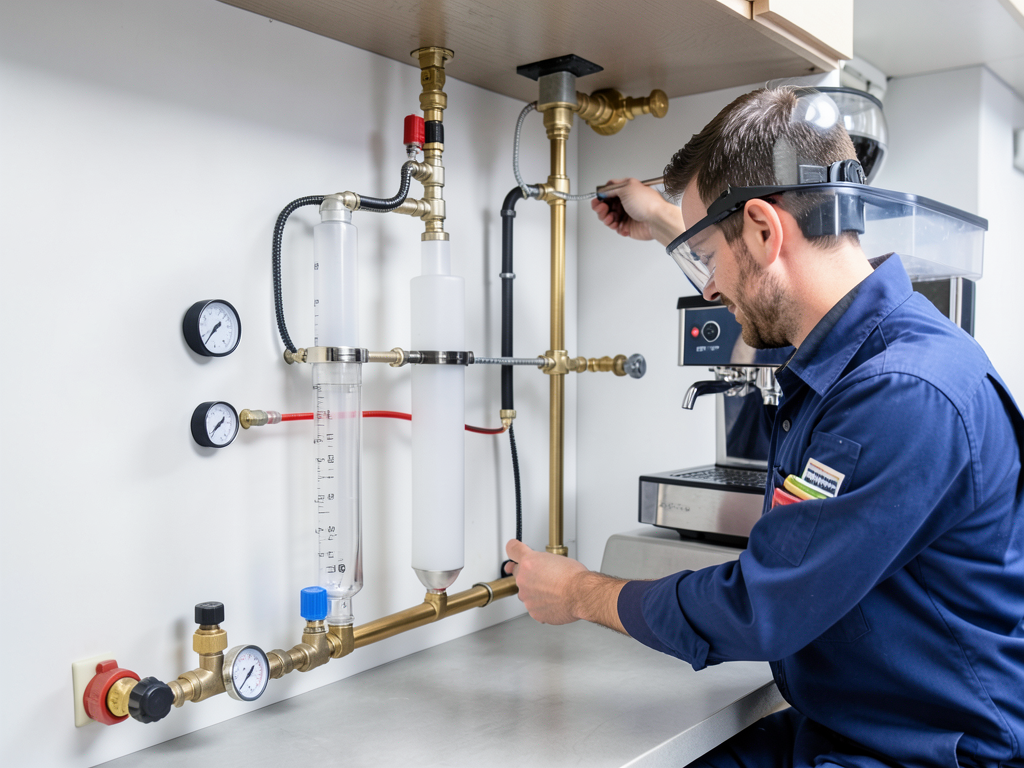
Installing a dedicated water line for your espresso machine involves more than just connecting a filter. Professional installation ensures proper pressure regulation, leak protection, and code compliance. The process typically includes:
- Water Quality Assessment
Testing your incoming water for TDS, hardness, pH, and chlorine levels to determine the appropriate filtration system.
- Pressure Regulation Installation
Installing a pressure reducing valve to maintain consistent 40-50 psi feed pressure for the espresso machine.
- Filtration System Mounting
Securing the filter housing, mounting brackets, and connecting to the main water supply with shut-off valves.
- Leak Detection Integration
Installing moisture sensors and automatic shut-off valves to prevent water damage from potential leaks.
- Machine Connection
Running dedicated 1/4″ or 3/8″ tubing from the filter to the espresso machine with proper fittings and pressure testing.
California plumbing code requires backflow prevention devices on all dedicated water lines for beverage equipment. This prevents contaminated water from flowing back into your home’s potable water supply. Additionally, San Jose building inspectors often require permits for any new dedicated water lines, especially in finished spaces or where walls must be opened. Plumbing Palo Alto.
Professional installation also includes proper drainage for filter waste water and condensate lines. Many reverse osmosis systems produce 3-4 gallons of waste water for every gallon of filtered water. This waste line must connect to your home’s drainage system properly to prevent cross-contamination and comply with local codes.
Maintenance Schedule for Long-Term Protection
Even the best filtration system requires regular maintenance to protect your espresso machine. San Jose’s high mineral content means filters need more frequent replacement than in areas with softer water. A typical maintenance schedule includes:
- Pre-filter replacement every 3-6 months (sediment and carbon stages)
- RO membrane replacement every 2-3 years
- Remineralization cartridge replacement every 6-12 months
- Pressure gauge and leak detector testing every 6 months
- Complete system sanitization annually
Many San Jose homeowners make the mistake of waiting until they notice problems before servicing their filtration system. By that time, scale may have already formed in the espresso machine. Professional monitoring services can track your water quality and remind you when maintenance is due, preventing costly repairs.
Water quality can also change seasonally in Santa Clara County. Winter rains can temporarily dilute mineral concentrations, while summer drought conditions often concentrate them. A professional service can adjust your filtration system seasonally to maintain optimal water chemistry year-round.
Cost-Benefit Analysis: Investment vs. Repairs
The upfront cost of professional water filtration installation ranges from $800 for basic cartridge systems to $4,000+ for comprehensive reverse osmosis setups with professional installation. While this seems expensive, consider the alternative costs:. Read more about Why You Should Consider a Whole House Carbon Filter If You Hate the Taste of San Jose Tap Water.
| Repair Scenario | Typical Cost | Frequency Without Filtration |
|---|---|---|
| Boiler descaling service | $300-500 | Annual |
| Heating element replacement | $400-800 | Every 2-3 years |
| Pressure sensor replacement | $200-400 | Every 18-24 months |
| Complete boiler replacement | $800-1,500 | Every 4-5 years |
Beyond repair costs, consider the value of your time dealing with machine downtime, the frustration of inconsistent coffee quality, and the shortened lifespan of your equipment. A $2,500 filtration system can easily pay for itself within 3-4 years while extending your machine’s life by 5-7 years.
For commercial operations in San Jose’s thriving coffee scene, the math is even more compelling. A busy cafe might spend $2,000-3,000 annually on espresso machine repairs due to water quality issues. Professional filtration can reduce this to under $500 while improving coffee consistency and customer satisfaction.
Local Success Stories: San Jose Homes Protected
Homeowners across San Jose are discovering the benefits of professional water filtration for their espresso equipment. In the Rose Garden neighborhood, a family with a $4,000 La Marzocco Linea Mini was replacing heating elements annually until they installed a reverse osmosis system. Three years later, their machine runs perfectly with no scale buildup.
A tech worker in Mountain View installed a BWT Bestmax system for his Rocket Appartamento and noticed immediate improvements in shot consistency and flavor clarity. The system paid for itself within 18 months through avoided repairs and the extended life of his $2,500 machine. Plumbing Mountain View.
Even in areas with slightly better water quality like Los Altos Hills, the mineral content remains high enough to cause problems for precision espresso equipment. Local coffee enthusiasts report that proper filtration not only protects their machines but actually improves their coffee’s taste by providing consistent, optimized water chemistry for extraction. Plumbing Los Altos Hills.
Choosing the Right System for Your Setup
Your choice of filtration system depends on several factors including your espresso machine type, water quality, and budget. Plumbed machines like La Marzocco, Slayer, and many commercial models require dedicated filtration systems. Pour-over machines can use point-of-use filters, though whole-house systems provide better protection for all appliances.
Consider these factors when selecting your system:
- Machine Type: Dual-boiler machines need more precise water chemistry than single-boiler models
- Usage Volume: High-volume users need systems with higher flow rates and larger capacity
- Space Constraints: Under-sink systems work for most homes, but some require creative installation
- Water Quality: Areas with extremely high TDS may need pre-treatment before RO systems
Professional plumbers familiar with espresso equipment can assess your specific situation and recommend the optimal solution. They understand the unique requirements of coffee extraction and can balance scale prevention with flavor optimization. Getting help from a 24 hour plumber in South San Jose right now.
Call (408) 381-5355 Today to Schedule Your Water Quality Test
Don’t let San Jose’s hard water destroy your expensive espresso machine. A simple water quality test can reveal exactly what’s in your water and what filtration system you need. Our licensed plumbers specialize in espresso machine water filtration and can install a system that protects your investment while improving your coffee’s taste.
Call (408) 381-5355 today to schedule your water quality test. We’ll test your water, explain your options, and provide a detailed quote for professional installation. Most installations can be completed within 2-3 hours, and we offer warranties on all our work. Protect your espresso machine before scale damage becomes expensive repairs.
Frequently Asked Questions
How hard is San Jose’s water for espresso machines?
San Jose’s water averages 15-20 grains per gallon hardness, which is considered very hard. This is 3-4 times higher than the ideal range for espresso machines, leading to rapid scale buildup and equipment damage.
Can I use a simple water filter pitcher for my espresso machine?
Water filter pitchers only remove chlorine and some sediment. They don’t reduce water hardness or TDS, so they provide no protection against scale buildup in espresso machines.
How often should I replace filters in San Jose?
Due to high mineral content, pre-filters should be replaced every 3-6 months, and main cartridges every 6-12 months. San Jose’s water quality requires more frequent maintenance than in softer water areas.
Is professional installation really necessary?
Yes. Professional installation ensures proper pressure regulation, leak protection, code compliance, and optimal system performance. DIY installations often miss critical components that protect both your machine and your home.
You may also find this helpful. Why Your Northwood Refrigerator Ice Maker Is Leaking (And How to Fix It Fast).
{
“@context”: “https://schema.org”,
“@type”: “BlogPosting”,
“headline”: “Why Your Modern San Jose Kitchen Needs a Dedicated Water Filtration Line for Your Espresso Machine”,
“description”: “San Jose’s hard water destroys espresso machines. Learn why professional filtration is essential for protecting your investment and getting perfect coffee extraction.”,
“wordCount”: 1907,
“datePublished”: “2026-06-13T12:03:00.000Z”,
“dateModified”: “2026-06-13T12:03:00.000Z”,
“inLanguage”: “en-US”,
“mainEntityOfPage”: {
“@type”: “WebPage”,
“@id”: “https://heritageplumbingsanjose.com”
},
“publisher”: {
“@type”: “LocalBusiness”,
“name”: “Heritage Plumbing San Jose”,
“url”: “https://heritageplumbingsanjose.com”
},
“author”: {
“@type”: “Organization”,
“name”: “Heritage Plumbing San Jose”,
“url”: “https://heritageplumbingsanjose.com”
},
“image”: {
“@type”: “ImageObject”,
“url”: “https://heritageplumbingsanjose.com/wp-content/uploads/2026/03/why-your-modern-san-jose-kitchen-needs-a-dedicated-1.png”
}
}
{
“@context”: “https://schema.org”,
“@type”: “Plumber”,
“name”: “Heritage Plumbing San Jose”,
“url”: “https://heritageplumbingsanjose.com”,
“address”: {
“@type”: “PostalAddress”,
“addressLocality”: “San Jose”
},
“areaServed”: {
“@type”: “City”,
“name”: “San Jose”
}
}
{
“@context”: “https://schema.org”,
“@type”: “FAQPage”,
“mainEntity”: [
{
“@type”: “Question”,
“name”: “Can I use a simple water filter pitcher for my espresso machine?”,
“acceptedAnswer”: {
“@type”: “Answer”,
“text”: “Water filter pitchers only remove chlorine and some sediment. They don’t reduce water hardness or TDS, so they provide no protection against scale buildup in espresso machines.”
}
},
{
“@type”: “Question”,
“name”: “How often should I replace filters in San Jose?”,
“acceptedAnswer”: {
“@type”: “Answer”,
“text”: “Due to high mineral content, pre-filters should be replaced every 3-6 months, and main cartridges every 6-12 months. San Jose’s water quality requires more frequent maintenance than in softer water areas.”
}
},
{
“@type”: “Question”,
“name”: “Is professional installation really necessary?”,
“acceptedAnswer”: {
“@type”: “Answer”,
“text”: “Yes. Professional installation ensures proper pressure regulation, leak protection, code compliance, and optimal system performance. DIY installations often miss critical components that protect both your machine and your home.”
}
}
]
}
{
“@context”: “https://schema.org”,
“@type”: “HowTo”,
“name”: “Professional Espresso Water Line Installation”,
“step”: [
{
“@type”: “HowToStep”,
“position”: 1,
“name”: “Water Quality Assessment”,
“text”: “Testing your incoming water for TDS, hardness, pH, and chlorine levels to determine the appropriate filtration system.”
},
{
“@type”: “HowToStep”,
“position”: 2,
“name”: “Pressure Regulation Installation”,
“text”: “Installing a pressure reducing valve to maintain consistent 40-50 psi feed pressure for the espresso machine.”
},
{
“@type”: “HowToStep”,
“position”: 3,
“name”: “Filtration System Mounting”,
“text”: “Securing the filter housing, mounting brackets, and connecting to the main water supply with shut-off valves.”
},
{
“@type”: “HowToStep”,
“position”: 4,
“name”: “Leak Detection Integration”,
“text”: “Installing moisture sensors and automatic shut-off valves to prevent water damage from potential leaks.”
},
{
“@type”: “HowToStep”,
“position”: 5,
“name”: “Machine Connection”,
“text”: “Running dedicated 1/4\” or 3/8\” tubing from the filter to the espresso machine with proper fittings and pressure testing.”
}
],
“image”: “https://heritageplumbingsanjose.com/wp-content/uploads/2026/03/why-your-modern-san-jose-kitchen-needs-a-dedicated-1.png”
}
{
“@context”: “https://schema.org”,
“@type”: “BreadcrumbList”,
“itemListElement”: [
{
“@type”: “ListItem”,
“position”: 1,
“name”: “Home”,
“item”: “https://heritageplumbingsanjose.com”
},
{
“@type”: “ListItem”,
“position”: 2,
“name”: “Blog”,
“item”: “https://heritageplumbingsanjose.com/blog”
},
{
“@type”: “ListItem”,
“position”: 3,
“name”: “Why Your Modern San Jose Kitchen Needs a Dedicated Water Filtration Line for Your Espresso Machine”
}
]
}
{
“@context”: “https://schema.org”,
“@type”: “Service”,
“serviceType”: “Plumbing”,
“provider”: {
“@type”: “LocalBusiness”,
“name”: “Heritage Plumbing San Jose”,
“url”: “https://heritageplumbingsanjose.com”
},
“areaServed”: {
“@type”: “City”,
“name”: “San Jose”
},
“description”: “San Jose’s hard water destroys espresso machines. Learn why professional filtration is essential for protecting your investment and getting perfect coffee extraction.”
}