
The Hidden Reason Your Evergreen Pool Is Losing Water
Your pool loses water every day. Most of it disappears through evaporation. But when the water level drops faster than a quarter inch per day, something else is happening underground. In Evergreen, the culprit is often hidden in plain sight: expansive clay soil that shifts and cracks your pool’s plumbing lines. Protecting your Evergreen basement with professional sump pump repair.
Evergreen’s hillside terrain sits on a layer of Monterey shale and clay that swells when wet and contracts when dry. This constant movement puts stress on underground pipes, causing hairline cracks that leak thousands of gallons before you notice. The result is a silent water loss that drives up your bill and threatens your pool’s structure.
Pool plumbing leaks in Evergreen typically occur in three places: the skimmer line, the return line, and the main drain. Each connects to your pump and filter system through rigid PVC pipes buried beneath concrete decking. When soil shifts, these pipes separate at the joints or crack along their length. The leak may be so small you never see water pooling, but your pool’s auto-fill keeps running, masking the problem. EPA WaterSense Fix a Leak Week.
Call (408) 381-5355 today to schedule your inspection. The longer you wait, the more water and money you waste.
Common Signs of a Pool Plumbing Leak in Evergreen
Water loss is the most obvious symptom, but other clues point to underground plumbing problems. Your pool deck may show cracks that follow the path of buried pipes. The soil around your equipment pad might stay damp even when the pump is off. You might hear a faint hissing sound near the pump when it runs, indicating air being drawn into a cracked suction line. Plumbing Palo Alto.
Evergreen’s clay soil creates unique challenges. When the ground swells after winter rains, it can lift your entire pool deck slightly. This pressure can separate pipe joints that were watertight in summer. The cycle repeats every year, gradually worsening small leaks into major problems.
Another sign specific to our area: if your home sits near the base of a hill, groundwater can create hydrostatic pressure against your pool shell. This pressure can force water through even tiny plumbing cracks, making leaks more pronounced during rainy seasons. Plumbing Los Altos Hills.
Our Leak Detection Process for Evergreen Properties
We start with a pressure test on each plumbing line. This involves isolating the skimmer, return, and main drain lines, then pumping them with compressed air or water. If pressure drops over 10 minutes, you have a leak. The test takes about an hour and pinpoints which line needs repair.
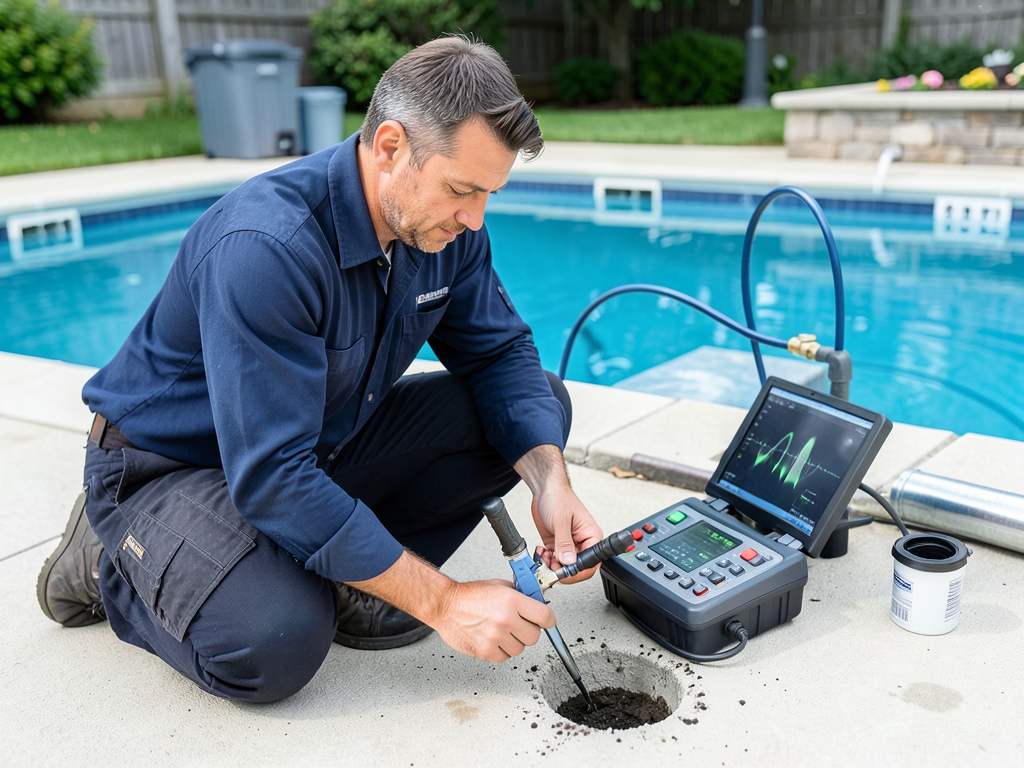
Next, we use electronic leak detection equipment. This sonar-like device listens for the sound of water escaping underground pipes. In clay soil, leaks often create a distinct bubbling or hissing noise that travels through the ground. We mark the exact location with spray paint so repairs target the right spot. Finding the right water heater replacement for your Almaden Valley home.
For structural leaks in the pool shell, we perform dye testing. We inject colored dye near suspected cracks while the pump runs. If the dye gets sucked into a crack, you’ve found your leak. This test works best when the pool is full and the water is calm.
Once we locate the leak, we dig carefully to expose the damaged pipe. Most repairs involve cutting out the cracked section and solvent-welding in a new PVC replacement. We use Schedule 40 PVC for pressurized lines and Schedule 80 for areas with high soil pressure.
Call (408) 381-5355 to schedule your leak detection service. Early detection prevents foundation damage and saves thousands in water bills.
Common Plumbing Issues in South Bay Pools
Beyond soil movement, several factors contribute to pool plumbing failures in the South Bay. Many pools built in the 1980s and 1990s used early formulations of PVC that become brittle over time. These pipes crack easily when soil shifts, even slightly.
Equipment pad leaks are another common problem. The pump, filter, and heater create vibration that loosens fittings over years of operation. A loose connection on the pressure side can spray water continuously, while a suction-side leak draws air into the system, reducing efficiency.
In older Cambrian Park and Almaden Valley homes, copper pipes sometimes connect to modern PVC systems. The different expansion rates of these materials create stress points where they join. These connections often fail first during temperature swings.
Variable speed pumps, popular since 2018, operate at lower speeds most of the time. This reduces water pressure in the lines, which can allow air to enter through tiny cracks that would seal under higher pressure. The result is mysterious air bubbles in your return jets.
Why Timely Repair Matters for San Jose Homeowners
Water rates in Santa Clara County average $4.15 per hundred cubic feet. A small leak losing 100 gallons per day costs about $18 monthly. Larger leaks can waste thousands of gallons weekly, adding hundreds to your bill. Santa Clara Valley Water District.
Drought regulations in Santa Clara County prohibit refilling pools without a valid reason. After repairs, you must document the leak to avoid fines when refilling. The Santa Clara Valley Water District requires photos of the repair and a signed statement from a licensed contractor.
Beyond water costs, underground leaks can undermine your pool deck. Water washing away soil creates voids that cause concrete to crack and settle unevenly. These structural issues cost far more to repair than fixing the original plumbing leak. Finding and fixing hidden pipe leaks in Cambrian Park houses.
Soil erosion from leaks can also affect your home’s foundation if the leak is near the house. Water traveling through expansive clay can cause foundation movement, leading to cracked walls and stuck doors. The EPA estimates that household leaks waste nearly 1 trillion gallons annually nationwide.
Service Areas We Cover in the South Bay
We serve Evergreen, San Jose, Milpitas, and the surrounding South Bay communities. Our technicians understand the specific soil conditions and building practices in each area. Whether you live near Evergreen Creek or in the hills above Story Road, we can diagnose and repair your pool plumbing issues.
Our service area includes the 95135, 95138, and 95121 zip codes. We’re familiar with the local permitting requirements and can handle all necessary inspections for your repair work.
Frequently Asked Questions
How can I tell if my pool is leaking or just evaporating?
Place a bucket on your pool step and fill it to the same level as your pool water. Mark the water line inside the bucket and on the pool tile. After 24 hours, compare the levels. If the pool dropped more than the bucket, you have a leak. This bucket test works best when your pool’s auto-fill is turned off.
How much does pool plumbing leak repair cost in San Jose?
Repair costs vary based on the leak location and severity. Simple pressure-side repairs typically range from $350 to $800. Main drain repairs or leaks under concrete decking cost $1,200 to $2,500. We provide detailed estimates after our initial leak detection test.
Can I repair a pool plumbing leak myself?
DIY repairs often fail because locating the exact leak point requires specialized equipment. Incorrect repairs can cause more damage, especially in clay soil where pipes need specific fittings to accommodate movement. Professional repair includes pressure testing to verify the fix and prevent future issues.
How long does pool plumbing leak repair take?
Most repairs take one to two days. Leak detection takes 2-4 hours. The actual repair, including excavation, pipe replacement, and pressure testing, typically requires 4-8 hours. Concrete deck replacement adds another day if needed. We work efficiently to minimize your pool downtime.
Will my homeowner’s insurance cover pool plumbing leaks?
Most policies cover sudden, accidental leaks but not gradual deterioration. If your leak resulted from soil movement or pipe age, it’s likely not covered. However, if a tree root or construction damage caused the break, you might have coverage. Check your policy or ask your agent for specifics.
DIY Diagnostic Steps Before Calling a Professional
Before scheduling service, perform these simple checks. Turn off your pool’s auto-fill for 24 hours. Monitor the water level daily. If it drops more than 1/4 inch per day, you likely have a leak. Check your equipment pad for wet spots or mineral deposits around pipes and fittings.
Listen to your pump when it’s running. A healthy system should run quietly. If you hear gurgling, hissing, or loud vibrations, these sounds often indicate air entering through a cracked suction line or loose fittings on the pressure side.
Inspect your pool deck for new cracks, especially near the coping or along straight lines that might follow buried pipes. In Evergreen’s clay soil, new cracks often appear after rainy periods when the ground swells.
Check your water bill for unexplained increases. Compare usage to the same month last year. A 20% or greater increase without changes in pool use or household occupancy often indicates a hidden leak.
Preventing Future Pool Plumbing Issues
Install a smart water monitor that tracks your pool’s water level and usage patterns. These devices alert you to unusual drops that might indicate developing leaks. Some models integrate with your phone for real-time monitoring.
Schedule annual plumbing inspections, especially if your pool is over 10 years old. A technician can pressure test your lines and check for early signs of wear before major leaks develop. This preventive maintenance costs far less than emergency repairs.
Consider upgrading old PVC pipes to modern formulations designed for our soil conditions. Newer PVC includes UV inhibitors and flexibility additives that resist cracking from soil movement and temperature changes.
Maintain proper water chemistry. Imbalanced pH or high calcium levels can accelerate pipe deterioration from the inside out. Test your water weekly and adjust chemicals to keep pH between 7.2 and 7.6.
When to Call for Emergency Service
Call immediately if you see a geyser of water from your equipment pad, hear loud banging from your pump, or notice your pool losing more than 2 inches of water overnight. These situations can cause rapid damage to your pool and surrounding property.
Air in your system that prevents the pump from priming is another emergency. Without proper water flow, your pump can overheat and fail, leading to costly replacements. If your pump runs but no water moves through the system, shut it off and call for service.
Structural cracks in your pool shell that leak require immediate attention. These leaks can undermine the entire pool structure if left unrepaired. Signs include visible cracks in the plaster, tiles falling off, or the pool shell shifting visibly.
Water pooling around your equipment pad that doesn’t drain could indicate a major leak under pressure. This water can damage electrical components and create slip hazards. Turn off the pump circuit breaker and call for emergency service.
Comparing Repair Methods and Materials
| Repair Method | Best For | Cost Range | Lifespan |
|---|---|---|---|
| Pipe replacement | Cracked pipes, joint separation | $350-$1,200 | 25+ years |
| Epoxy lining | Multiple small leaks | $800-$2,000 | 15-20 years |
| Underground repair clamp | Accessible metal pipes | $200-$500 | 5-10 years |
| Complete line replacement | Aged systems, multiple failures | $2,000-$5,000 | 30+ years |
Choosing the right repair method depends on your specific situation. We recommend pipe replacement for most leaks because it provides the longest-lasting solution. Epoxy lining works well for inaccessible pipes but costs more upfront.
Underground repair clamps offer a quick fix but often fail again as soil continues to shift. They work best as temporary solutions while planning a complete replacement.
Complete line replacement makes sense when your plumbing is over 15 years old or has multiple leak points. The higher initial cost pays off through decades of trouble-free operation.
Understanding Your Pool’s Plumbing System
Your pool’s plumbing consists of several key components. The suction side includes the main drain, skimmer, and vacuum lines that draw water to the pump. The pressure side includes return lines that push filtered water back to the pool through jets.
Between these sides sits your equipment pad with the pump, filter, heater, and chlorinator. Each component connects through a network of pipes, valves, and fittings. A leak anywhere in this system reduces efficiency and wastes water.
Modern pools often include additional features like waterfalls, spa jets, or automated cleaning systems. Each feature adds more plumbing lines that can develop leaks. The more complex your system, the more potential failure points exist.
Valves control water flow throughout your system. Gate valves, ball valves, and check valves each serve specific purposes. A leaking valve can waste as much water as a cracked pipe, so check all valves during your inspection.
Local Building Codes and Permit Requirements
San Jose and Santa Clara County require permits for most pool plumbing repairs. The specific requirements depend on the repair scope. Simple valve replacements might not need permits, but pipe replacements or system modifications do.
California Plumbing Code Section 609 covers pool piping materials and installation methods. It requires Schedule 40 PVC for pressurized lines and specific burial depths based on soil conditions. In Evergreen’s expansive clay, pipes must be bedded in sand to prevent stress from soil movement.
Local codes also address backflow prevention. Your pool’s fill line must have an approved backflow preventer to stop pool water from contaminating your home’s drinking water supply. This device requires annual testing by a certified professional.
Permit fees in Santa Clara County range from $75 to $300 depending on the repair scope. The process typically takes 3-5 business days. We handle all permitting for our customers as part of our complete service.
Environmental Impact of Pool Leaks
A small pool leak might seem insignificant, but the cumulative impact is substantial. The average pool leak wastes 7,000 to 15,000 gallons annually. In drought-prone California, this water loss affects everyone through higher rates and stricter restrictions.
Leaking pool water carries chemicals into the soil and groundwater. Chlorine, pH adjusters, and algaecides can harm plants and wildlife. In areas near creeks or wetlands, chemical-laden pool water can damage sensitive ecosystems.
The energy waste compounds the problem. A leaking pool forces your pump to work harder to maintain proper circulation. This increased runtime consumes more electricity, adding to your carbon footprint and utility costs.
Water conservation is especially critical in Evergreen, where many homes rely on shared aquifers. Every gallon wasted affects the entire community’s water security. Fixing leaks promptly demonstrates environmental responsibility and helps maintain reasonable water rates for everyone.
Advanced Leak Detection Technologies
Beyond basic pressure testing, we use several advanced technologies to locate difficult leaks. Ultrasonic listening devices amplify the sound of water escaping underground pipes. In clay soil, these devices can pinpoint leaks within inches, even when the pipes are buried under concrete.
Thermal imaging cameras detect temperature differences caused by leaking water. Cool water from a leak creates a thermal signature that shows up clearly on camera, even through soil and concrete. This technology works best for larger leaks or those near the surface.
Tracer gas testing involves injecting a safe, inert gas into your plumbing lines. The gas escapes through the leak and rises to the surface, where we detect it with specialized sensors. This method works exceptionally well for tiny leaks that don’t create enough sound for ultrasonic detection.
Video pipe inspection uses a small camera on a flexible cable to examine the inside of your pipes. While primarily used for drains, this technology helps identify pipe deterioration, mineral buildup, or damage that might lead to future leaks.
Cost Factors for Pool Plumbing Repairs
Several factors influence your repair costs. Accessibility is the biggest variable. A leak under your equipment pad costs far less to repair than one under a concrete deck or deep underground.
The pipe material affects repair complexity. Copper pipes require different techniques than PVC and often cost more to repair. Older galvanized steel pipes might need complete replacement rather than repair.
Your pool’s age and construction method impact repair approaches. Older pools might have plumbing configurations that are difficult to access or repair with modern methods. Custom features like waterfalls or spas add complexity and cost.
Emergency service calls cost more than scheduled repairs. If you need service outside normal business hours or on weekends, expect to pay 1.5 to 2 times the standard rate. Planning repairs during regular hours saves money.
Permit requirements in your specific area affect total costs. Some neighborhoods in Evergreen require additional inspections or have stricter code requirements, adding to the overall expense.
Maintenance Tips to Extend Your Plumbing Life
Regular maintenance prevents most plumbing failures. Clean your pool’s strainer baskets weekly to prevent debris from entering the pump and causing stress on seals and fittings. Check all visible plumbing connections monthly for signs of moisture or mineral buildup.
Monitor your pump’s pressure gauge. A gradual increase in pressure often indicates a dirty filter or mineral buildup in pipes. Sudden pressure drops might signal a leak or air entering the system. Address these changes promptly to prevent damage.
Winterize your pool properly if you close it seasonally. Freezing water expands and can crack pipes even in our mild climate. Use freeze protectors or run your pump when temperatures approach freezing.
Balance your water chemistry consistently. Corrosive water eats away at pipes from the inside, while scaling water creates pressure buildups. Test and adjust your water chemistry weekly during swimming season.
Consider installing union fittings at key connection points. These allow you to disconnect pipes without cutting them, making future repairs easier and less expensive. They cost more upfront but save money on repairs.
Choosing the Right Contractor
Not all pool service companies have the expertise to diagnose and repair plumbing leaks properly. Look for contractors with specific experience in underground leak detection and plumbing repair, not just general pool maintenance.
Verify licensing through the California State License Board. Pool plumbing repairs require a C-53 (Pool Contractor) or C-36 (Plumbing Contractor) license. Ask to see the contractor’s license and insurance certificates before work begins.
Request references from customers with similar repair needs. A reputable contractor should provide several recent references who can speak to the quality and durability of their work.
Ask about warranties on both labor and materials. Quality contractors typically offer at least a one-year warranty on repairs. Be wary of anyone unwilling to guarantee their work.
Get multiple estimates, but don’t choose based on price alone. The cheapest option often cuts corners on materials or diagnostic thoroughness, leading to recurring problems and higher long-term costs.
Don’t let a small leak become a big problem. Call (408) 381-5355 now for expert leak detection and repair. Our experienced technicians will find your leak quickly and fix it right the first time, saving you water, money, and headaches.
{
“@context”: “https://schema.org”,
“@type”: “BlogPosting”,
“headline”: “The Hidden Reason Your Evergreen Pool Is Losing Water”,
“description”: “Discover why Evergreen pools lose water due to clay soil shifts and plumbing leaks. Get expert leak detection and repair in San Jose before costly damage occurs.”,
“wordCount”: 3134,
“datePublished”: “2026-06-01T14:03:00.000Z”,
“dateModified”: “2026-06-01T14:03:00.000Z”,
“inLanguage”: “en-US”,
“mainEntityOfPage”: {
“@type”: “WebPage”,
“@id”: “https://heritageplumbingsanjose.com”
},
“publisher”: {
“@type”: “LocalBusiness”,
“name”: “Heritage Plumbing San Jose”,
“url”: “https://heritageplumbingsanjose.com”
},
“author”: {
“@type”: “Organization”,
“name”: “Heritage Plumbing San Jose”,
“url”: “https://heritageplumbingsanjose.com”
},
“image”: {
“@type”: “ImageObject”,
“url”: “https://heritageplumbingsanjose.com/wp-content/uploads/2026/03/the-hidden-reason-your-evergreen-pool-is-losing-wa-1.png”
}
}
{
“@context”: “https://schema.org”,
“@type”: “Plumber”,
“name”: “Heritage Plumbing San Jose”,
“url”: “https://heritageplumbingsanjose.com”,
“address”: {
“@type”: “PostalAddress”,
“addressLocality”: “San Jose”
},
“areaServed”: {
“@type”: “City”,
“name”: “San Jose”
}
}
{
“@context”: “https://schema.org”,
“@type”: “FAQPage”,
“mainEntity”: [
{
“@type”: “Question”,
“name”: “How can I tell if my pool is leaking or just evaporating?”,
“acceptedAnswer”: {
“@type”: “Answer”,
“text”: “Place a bucket on your pool step and fill it to the same level as your pool water. Mark the water line inside the bucket and on the pool tile. After 24 hours, compare the levels. If the pool dropped more than the bucket, you have a leak. This bucket test works best when your pool’s auto-fill is turned off.”
}
},
{
“@type”: “Question”,
“name”: “How much does pool plumbing leak repair cost in San Jose?”,
“acceptedAnswer”: {
“@type”: “Answer”,
“text”: “Repair costs vary based on the leak location and severity. Simple pressure-side repairs typically range from $350 to $800. Main drain repairs or leaks under concrete decking cost $1,200 to $2,500. We provide detailed estimates after our initial leak detection test.”
}
},
{
“@type”: “Question”,
“name”: “Can I repair a pool plumbing leak myself?”,
“acceptedAnswer”: {
“@type”: “Answer”,
“text”: “DIY repairs often fail because locating the exact leak point requires specialized equipment. Incorrect repairs can cause more damage, especially in clay soil where pipes need specific fittings to accommodate movement. Professional repair includes pressure testing to verify the fix and prevent future issues.”
}
},
{
“@type”: “Question”,
“name”: “How long does pool plumbing leak repair take?”,
“acceptedAnswer”: {
“@type”: “Answer”,
“text”: “Most repairs take one to two days. Leak detection takes 2-4 hours. The actual repair, including excavation, pipe replacement, and pressure testing, typically requires 4-8 hours. Concrete deck replacement adds another day if needed. We work efficiently to minimize your pool downtime.”
}
},
{
“@type”: “Question”,
“name”: “Will my homeowner’s insurance cover pool plumbing leaks?”,
“acceptedAnswer”: {
“@type”: “Answer”,
“text”: “Most policies cover sudden, accidental leaks but not gradual deterioration. If your leak resulted from soil movement or pipe age, it’s likely not covered. However, if a tree root or construction damage caused the break, you might have coverage. Check your policy or ask your agent for specifics.”
}
}
]
}
{
“@context”: “https://schema.org”,
“@type”: “BreadcrumbList”,
“itemListElement”: [
{
“@type”: “ListItem”,
“position”: 1,
“name”: “Home”,
“item”: “https://heritageplumbingsanjose.com”
},
{
“@type”: “ListItem”,
“position”: 2,
“name”: “Blog”,
“item”: “https://heritageplumbingsanjose.com/blog”
},
{
“@type”: “ListItem”,
“position”: 3,
“name”: “The Hidden Reason Your Evergreen Pool Is Losing Water”
}
]
}
{
“@context”: “https://schema.org”,
“@type”: “Service”,
“serviceType”: “Plumbing”,
“provider”: {
“@type”: “LocalBusiness”,
“name”: “Heritage Plumbing San Jose”,
“url”: “https://heritageplumbingsanjose.com”
},
“areaServed”: {
“@type”: “City”,
“name”: “San Jose”
},
“description”: “Discover why Evergreen pools lose water due to clay soil shifts and plumbing leaks. Get expert leak detection and repair in San Jose before costly damage occurs.”
}