
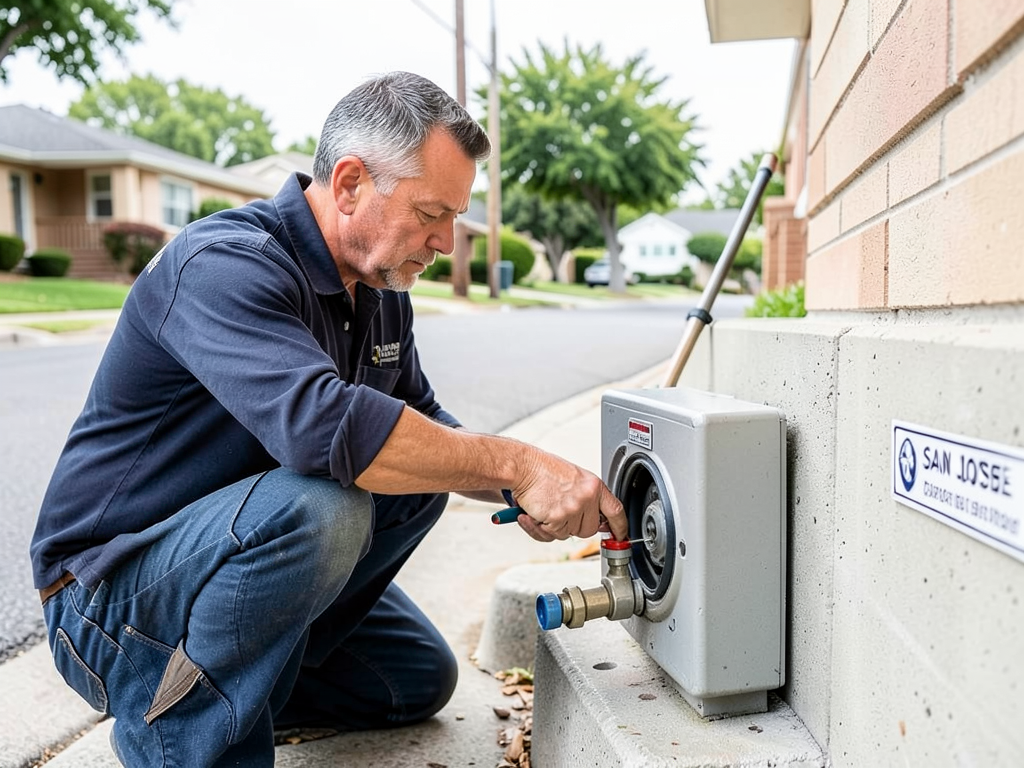
How to Find Your Main Water Shut-Off Valve in San Jose: A Homeowner’s Guide
- Locate Your Water Meter
Start at the street-side water meter box. This is typically a concrete or plastic rectangular box with a removable lid, often marked “Water” and located near the curb or sidewalk. Use a meter key or sturdy screwdriver to lift the lid.
- Identify the Homeowner’s Side Valve
Inside the meter box, you’ll see two valves: the city-side valve (toward the street) and the homeowner’s side valve (toward your house). The homeowner’s side valve is the one you can legally operate.
- Look for the Main House Valve
If your home has a basement or crawl space, the main shut-off valve is often near where the main water line enters the house. In slab-on-grade homes common in San Jose, it’s typically near an exterior wall, often close to a hose bib. San Jose Water Company.
- Check the Garage or Utility Room
In newer San Jose homes, the main valve might be located in the garage or a utility room, especially in homes without basements or crawl spaces.
Knowing where your main water shut-off valve is located can save you thousands of dollars in water damage during a plumbing emergency. In San Jose’s unique housing landscape, valve locations vary significantly based on home construction type and age. Plumbing Palo Alto.
Common Locations by San Jose Home Type
San Jose’s diverse architecture means valve locations differ dramatically. Understanding your home’s construction helps you find the valve quickly when seconds count.
Slab Foundations (Common in Willow Glen/Rose Garden)
Most San Jose homes built after the 1950s feature slab-on-grade construction. In these homes, the main shut-off valve is typically located near an exterior wall, often adjacent to a hose bib or outdoor faucet. The valve might be buried in a small access box or exposed on the wall surface.
Look for a small round or rectangular access cover in your front or side yard, often hidden under landscaping or decorative bark. These access points protect the valve from weather and accidental damage while keeping it accessible during emergencies.
Crawl Spaces and Basements
Older San Jose neighborhoods like Naglee Park and parts of downtown feature homes with crawl spaces or partial basements. In these structures, the main shut-off valve is usually located where the main water line enters the house, often in a utility area or near the water heater.
Access might require a flashlight and crawling through a small door or hatch. The valve in these locations is typically a gate valve with a round wheel handle, different from the ball valves common in newer homes.
Exterior Perimeter Walls (Near the Hose Bib)
Many San Jose homes, regardless of foundation type, have the main shut-off valve located on an exterior wall near a hose bib. This placement allows easy access for winterization and maintenance while keeping the valve protected from extreme weather.
The valve might be exposed or housed in a small plastic or metal box attached to the wall. Look for a lever handle (ball valve) or wheel handle (gate valve) depending on your home’s age and plumbing system. Plumbing Los Altos Hills.
The Street-Side Water Meter (San Jose Water Company vs. Homeowner Responsibility)
San Jose Water Company maintains the water meter and the city-side valve. The homeowner is responsible for everything from the meter box toward the house, including the homeowner’s side valve and all indoor plumbing. Plumbing Mountain View.
The meter box contains two valves: the city-side valve (toward the street) which only San Jose Water Company can operate, and the homeowner’s side valve which you can turn off in emergencies. The homeowner’s valve is typically marked with a blue or green tag.
Important: Never force a valve that won’t turn. If you encounter resistance, call a licensed plumber. Forcing a stuck valve can break the stem and create a much worse emergency.
Identifying Your Valve Type
Different valve types require different handling techniques. Using the wrong method can damage your plumbing system.
Ball Valve (Lever Handle)
Ball valves feature a lever handle that moves 90 degrees to open or close. When the handle is parallel to the pipe, the valve is open. When perpendicular, it’s closed. These valves are common in homes built after the 1970s and are preferred for their reliability and ease of use.
To operate: Turn the handle a quarter turn until it’s perpendicular to the pipe. You’ll feel a firm stop when fully closed. These valves rarely get stuck and can be operated with one hand.
Gate Valve (Round Wheel Handle)
Gate valves use a round wheel handle that turns multiple times to open or close. These older-style valves are common in homes built before the 1970s. They work by raising or lowering a metal gate inside the valve body.
To operate: Turn the wheel clockwise several times until it stops. Never force a gate valve that won’t turn easily. These valves are prone to seizing if not used regularly and can break if forced.
How to Turn Each One Safely Without Snapping the Stem
For ball valves: Use steady, firm pressure. If the handle won’t move, don’t force it. Apply penetrating oil and wait 15 minutes before trying again. If still stuck, call a plumber. Getting help from a 24 hour plumber in South San Jose right now.
For gate valves: Turn slowly and steadily. If you feel resistance, stop immediately. Forcing a stuck gate valve is the most common way homeowners break their main shut-off valve. The cost to repair a broken valve often exceeds emergency plumbing service fees.
Always turn valves slowly to prevent water hammer, which can damage pipes and fixtures throughout your home. After closing, open a faucet inside to verify the water is off.
What to Do if You Can’t Find Your Shut-Off Valve
Can’t locate your main shut-off valve? You’re not alone. Many homeowners discover this gap in their knowledge only when facing an actual emergency.
Checking the Water Heater Line
Sometimes the main shut-off valve is located near the water heater, especially in homes with utility rooms or garages. Look for a valve on the cold water line entering the top of the water heater. While this isn’t the main house valve, it can stop water flow to most of your home in an emergency.
Note that shutting off the water heater line won’t stop water flow to outdoor hose bibs or irrigation systems, which often have separate lines from the main supply.
Looking for the ‘Curb Box’
The curb box is the underground access point to your water meter and homeowner’s side valve. If you can’t find it in your yard, it might be buried under soil, mulch, or landscaping. Look for a small rectangular or round cover, often marked with “Water” or a similar designation.
Use a meter key or sturdy screwdriver to probe the ground near where you think the curb box should be. In some cases, especially in newer developments, the curb box might be located in a neighbor’s yard or a common area.
When to Call a Professional Plumber
Call a licensed plumber if: you can’t locate any shut-off valve after thorough searching, you find a valve but it’s stuck and won’t turn, or you’re unsure which valve controls your main water supply.
A professional can locate and test your main shut-off valve, identify any secondary valves throughout your home, and provide emergency shut-off tags or markers for quick identification during a crisis. This service typically costs $150-300 but can prevent thousands in water damage.
Emergency Plumbing Situations in San Jose
San Jose’s unique climate and infrastructure create specific plumbing emergency scenarios that every homeowner should understand.
Burst Pipe Response
When a pipe bursts, every second counts. First, locate and turn off your main shut-off valve. Then, open all faucets to drain remaining water from the pipes. This reduces pressure and minimizes additional damage.
San Jose’s clay soils can cause foundation shifting, particularly during dry summer months, leading to pipe stress and eventual failure. Homes in areas like Almaden Valley and Evergreen are especially susceptible to this seasonal risk. Protecting your Evergreen basement with professional sump pump repair.
Water Heater Failure
Water heater failures often involve both water and energy hazards. In addition to turning off the main water supply, you may need to shut off the gas supply or electrical breaker to the water heater. The shut-off valve on the cold water line near the heater can provide a quick secondary option.
San Jose’s hard water accelerates water heater corrosion, making failures more common in homes over 10 years old. Regular maintenance can prevent many of these emergencies.
Sewer Line Backups
While sewer backups don’t require shutting off your water supply, they often accompany other plumbing emergencies. San Jose’s aging sewer infrastructure in older neighborhoods can contribute to these situations, particularly during heavy winter rains.
If you experience sewage backing up into your home, avoid using any plumbing fixtures and call for emergency service immediately. Raw sewage poses serious health risks and can cause extensive property damage.
Call (408) 381-5355 today to schedule your emergency valve inspection. Our licensed plumbers can locate, test, and tag all your home’s shut-off valves, ensuring you’re prepared when disaster strikes.
San Jose Water Provider Information
San Jose’s water supply comes from multiple providers, each with specific procedures for emergency assistance.
San Jose Water Company serves most of the city and can be reached at (408) 279-7900 for after-hours emergencies. They can shut off water at the street if you’re unable to locate or operate your homeowner’s valve.
Great Oaks Water Company serves specific areas of South San Jose and can be contacted at (408) 227-8000 for emergency water shut-off assistance.
Knowing your water provider is crucial because they maintain different infrastructure and have varying emergency response protocols. Your water bill or provider’s website can confirm which company serves your address.
Seismic Safety Considerations
San Jose sits in a seismically active region, making earthquake preparedness essential for plumbing systems. The 1989 Loma Prieta earthquake demonstrated how seismic activity can rupture water lines and create widespread service disruptions.
Consider installing an automatic earthquake shut-off valve, which detects seismic activity and automatically closes your main water valve. These devices can prevent catastrophic water damage if your home’s plumbing is damaged during an earthquake.
According to Santa Clara County building codes, homes in certain zones require seismic shut-off valves for gas lines, and many homeowners choose to add water line protection as well. The cost ranges from $500-1,500 installed but can prevent tens of thousands in damage.
Maintenance and Testing
Regular valve maintenance prevents emergency failures. Test your main shut-off valve quarterly by turning it off and on again. This prevents seizing and ensures the valve will work when you need it most.
During testing, check for leaks around the valve stem and ensure the valve turns smoothly. If you notice any corrosion, difficulty turning, or water seepage, call a plumber for inspection and possible replacement.
Document your valve locations with photos and notes, and ensure all household members know where the main shut-off valve is located. Consider attaching a waterproof tag or label near the valve for quick identification during emergencies.
Local Building Code Requirements
Santa Clara County and San Jose building codes require specific plumbing standards that affect valve placement and accessibility. According to the California Plumbing Code (CPC Section 604.8), main shut-off valves must be accessible without removing permanent construction or equipment. California Plumbing Code Section 604.8.
Newer construction in San Jose must comply with Title 24 energy efficiency requirements, which can affect plumbing system design and valve placement. These codes ensure that emergency shut-off capabilities are maintained while meeting modern efficiency standards.
Permits are required for any work involving the main water line or shut-off valve replacement. Always hire a licensed plumber familiar with local codes to ensure compliance and maintain your home’s warranty coverage.
Don’t wait for an emergency to find your main water shut-off valve. Call (408) 381-5355 to schedule a comprehensive plumbing inspection. Our experienced technicians will locate all your home’s shut-off valves, test their operation, and provide emergency shut-off tags for quick identification. Protect your San Jose home from costly water damage today.
Frequently Asked Questions
How long does it take to find the main water shut-off valve?
Most homeowners can locate their main shut-off valve within 15-30 minutes by following systematic searching methods. If you’re unable to find it after 30 minutes of searching, call a professional plumber who can typically locate it in under 10 minutes.
What tools do I need to turn off the main water valve?
For most residential valves, you only need your hand to operate the valve. However, for curb-side meter valves, you may need a meter key or a sturdy 5/16-inch hex key. Keep these tools accessible and know how to use them before an emergency occurs.
Can I turn off the water if I rent my home?
Yes, you can and should turn off the water in an emergency regardless of whether you rent or own. However, always notify your landlord or property manager after shutting off the water and document the emergency situation. Your safety and property protection take priority over lease agreements.
How much does it cost to replace a main shut-off valve?
Replacing a main shut-off valve typically costs $350-600, depending on valve type, accessibility, and local labor rates. This investment is worthwhile considering the potential thousands in water damage from a failed valve during an emergency. Some homeowners choose to replace aging valves proactively before they fail.
{
“@context”: “https://schema.org”,
“@type”: “BlogPosting”,
“headline”: “How to find your main water shut off valve before a Burbank plumbing emergency starts”,
“description”: “Learn where your main water shut off valve is located in Burbank homes. Find it fast to prevent costly water damage during plumbing emergencies.”,
“wordCount”: 2269,
“datePublished”: “2026-03-08T12:30:00.000Z”,
“dateModified”: “2026-03-08T12:30:00.000Z”,
“inLanguage”: “en-US”,
“mainEntityOfPage”: {
“@type”: “WebPage”,
“@id”: “https://heritageplumbingsanjose.com”
},
“publisher”: {
“@type”: “LocalBusiness”,
“name”: “Heritage Plumbing San Jose”,
“url”: “https://heritageplumbingsanjose.com”
},
“author”: {
“@type”: “Organization”,
“name”: “Heritage Plumbing San Jose”,
“url”: “https://heritageplumbingsanjose.com”
},
“image”: {
“@type”: “ImageObject”,
“url”: “https://heritageplumbingsanjose.com/wp-content/uploads/2026/03/how-to-find-your-main-water-shut-off-valve-before-1.png”
}
}
{
“@context”: “https://schema.org”,
“@type”: “Plumber”,
“name”: “Heritage Plumbing San Jose”,
“url”: “https://heritageplumbingsanjose.com”,
“address”: {
“@type”: “PostalAddress”,
“addressLocality”: “San Jose”
},
“areaServed”: {
“@type”: “City”,
“name”: “San Jose”
}
}
{
“@context”: “https://schema.org”,
“@type”: “FAQPage”,
“mainEntity”: [
{
“@type”: “Question”,
“name”: “How long does it take to find the main water shut-off valve?”,
“acceptedAnswer”: {
“@type”: “Answer”,
“text”: “Most homeowners can locate their main shut-off valve within 15-30 minutes by following systematic searching methods. If you’re unable to find it after 30 minutes of searching, call a professional plumber who can typically locate it in under 10 minutes.”
}
},
{
“@type”: “Question”,
“name”: “What tools do I need to turn off the main water valve?”,
“acceptedAnswer”: {
“@type”: “Answer”,
“text”: “For most residential valves, you only need your hand to operate the valve. However, for curb-side meter valves, you may need a meter key or a sturdy 5/16-inch hex key. Keep these tools accessible and know how to use them before an emergency occurs.”
}
},
{
“@type”: “Question”,
“name”: “Can I turn off the water if I rent my home?”,
“acceptedAnswer”: {
“@type”: “Answer”,
“text”: “Yes, you can and should turn off the water in an emergency regardless of whether you rent or own. However, always notify your landlord or property manager after shutting off the water and document the emergency situation. Your safety and property protection take priority over lease agreements.”
}
},
{
“@type”: “Question”,
“name”: “How much does it cost to replace a main shut-off valve?”,
“acceptedAnswer”: {
“@type”: “Answer”,
“text”: “Replacing a main shut-off valve typically costs $350-600, depending on valve type, accessibility, and local labor rates. This investment is worthwhile considering the potential thousands in water damage from a failed valve during an emergency. Some homeowners choose to replace aging valves proactively before they fail.”
}
}
]
}
{
“@context”: “https://schema.org”,
“@type”: “HowTo”,
“name”: “How to Find Your Main Water Shut-Off Valve”,
“step”: [
{
“@type”: “HowToStep”,
“position”: 1,
“name”: “Locate Your Water Meter”,
“text”: “Start at the street-side water meter box. This is typically a concrete or plastic rectangular box with a removable lid, often marked \”Water\” and located near the curb or sidewalk. Use a meter key or sturdy screwdriver to lift the lid.”
},
{
“@type”: “HowToStep”,
“position”: 2,
“name”: “Identify the Homeowner’s Side Valve”,
“text”: “Inside the meter box, you’ll see two valves: the city-side valve (toward the street) and the homeowner’s side valve (toward your house). The homeowner’s side valve is the one you can legally operate.”
},
{
“@type”: “HowToStep”,
“position”: 3,
“name”: “Look for the Main House Valve”,
“text”: “If your home has a basement or crawl space, the main shut-off valve is often near where the main water line enters the house. In slab-on-grade homes common in San Jose, it’s typically near an exterior wall, often close to a hose bib. San Jose Water Company.”
},
{
“@type”: “HowToStep”,
“position”: 4,
“name”: “Check the Garage or Utility Room”,
“text”: “In newer San Jose homes, the main valve might be located in the garage or a utility room, especially in homes without basements or crawl spaces.”
}
],
“image”: “https://heritageplumbingsanjose.com/wp-content/uploads/2026/03/how-to-find-your-main-water-shut-off-valve-before-1.png”
}
{
“@context”: “https://schema.org”,
“@type”: “BreadcrumbList”,
“itemListElement”: [
{
“@type”: “ListItem”,
“position”: 1,
“name”: “Home”,
“item”: “https://heritageplumbingsanjose.com”
},
{
“@type”: “ListItem”,
“position”: 2,
“name”: “Blog”,
“item”: “https://heritageplumbingsanjose.com/blog”
},
{
“@type”: “ListItem”,
“position”: 3,
“name”: “How to find your main water shut off valve before a Burbank plumbing emergency starts”
}
]
}
{
“@context”: “https://schema.org”,
“@type”: “Service”,
“serviceType”: “Plumbing”,
“provider”: {
“@type”: “LocalBusiness”,
“name”: “Heritage Plumbing San Jose”,
“url”: “https://heritageplumbingsanjose.com”
},
“areaServed”: {
“@type”: “City”,
“name”: “San Jose”
},
“description”: “Learn where your main water shut off valve is located in Burbank homes. Find it fast to prevent costly water damage during plumbing emergencies.”
}